The ‘Great Debates’ in international relations theory
Almost a century after its birth, IR is still in the process of defining itself. The Great Debates stimulated discussion about the essential characteristics of the discipline, and through these IR theory has undoubtedly advanced in complexity and nuance since its founding, and doubtless will continue to do so.
The Successes and Failures of the World Bank on Global Poverty
The World Bank rose out of political and security necessity in the US sphere of influence to stabilize Europe. It has grown to adapt through time, both to the new challenges of the late 20th century, as well as to the politically correct speech the growing global civil society has been promoting in the ever globalizing public space.
The criterion of society’s level of development
As a whole the situation in the Central Asian region is fraught with future social disturbances. They are inevitable in all countries, but the degree of violence will be different according to the achieved level of development. The bloodiest events are possible in Uzbekistan, Tajikistan and Turkmenistan. In the latter country, a variant of the Libyan example is quite probable.
Internationalized Sovereignty: Erosion or Extension?
The Kosovo intervention was the first in history to be justified solely on the basis of human rights breaches by a sovereign state within its territory, which were judged to present threat to international order. The bottom line remains that Belgrade’s sovereignty over Kosovo was first breached and then completely removed by the international community.
Decision Makers, Personal Belief, and Foreign Policy
Beliefs do matter in foreign policy as decision-making rarely conforms to demanding rational choice models. The power of ideas in international relations highlights particular human weaknesses, which might help understand a number of seemingly inexplicable decisions. Beliefs, however, are only one part of a wider framework.
Yin or Yang? China and the Muslim world
In its autonomous region of Xinjiang China will decide upon its lasting and largely irreversible geopolitical trademark in entering the Global Balkans. Though it is narrow, the window of opportunity exists for China to take a credible leadership for regional peace and secure stable confidence.
Absolute and Relative Gains in the Real World
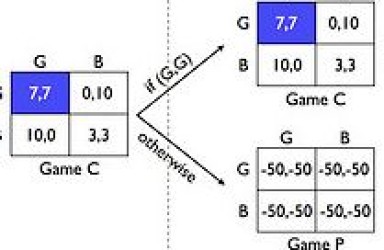
The real world is too complicated to be explained by absolute or relative gains alone. Both theories treat states as rational and unitary actors. Due to the diversity of interests, it is not easy to define a unitary national interest in some issues. Consequently, gains per se sometimes cannot be clearly stated.
Has the war on terror been an appropriate response to terrorism?
Terrorism has existed for centuries as a way of creating disruption and fear. Yet, to declare a war against it has created numerous questions as to how to fight this multifaceted idea. Individual groups do indeed hold ideological stances, just as legitimate political parties do, but to brand all terrorism and terrorists as the same would be incorrect.
Issues in the association of women with peace activism
Women’s roles in working towards peace have become increasingly celebrated. The core issue with the association of women with peace activism is that it raises, and reinforces, gendered norms, through the assumptions of what it means to be a woman. In academic literature, these assumptions of Maternalism and Essentialism deny women agency.
Ending the Odyssey: A Necessary if Imperfect Proposal for Restoring the Peace in Libya
While the lessons of the Libyan crisis for international relations are many, the most important lesson is the need to change the way that humanitarian interventions are conducted, as the violence experienced by civilians since the foreign intervention has increased substantially.